+1-480-241-8198
 +44-7428758945
 +61-1300-332-888
 +91 9811400594
Patients going to hospitals do not expect a great software experience as their first encounter. Rather, they want good care and swift services, which are often tied to health appointments, test results, hospital transfers, or emergency call response times. While these interactions may seem simple on the surface, an entire system works behind the scenes to keep each step running smoothly. This is where Salesforce for Healthcare plays a crucial role, helping healthcare providers streamline operations, improve care coordination, and deliver seamless patient experiences. When these systems fail to keep up with the pace, patients suffer, and hospitals are ultimately held responsible.
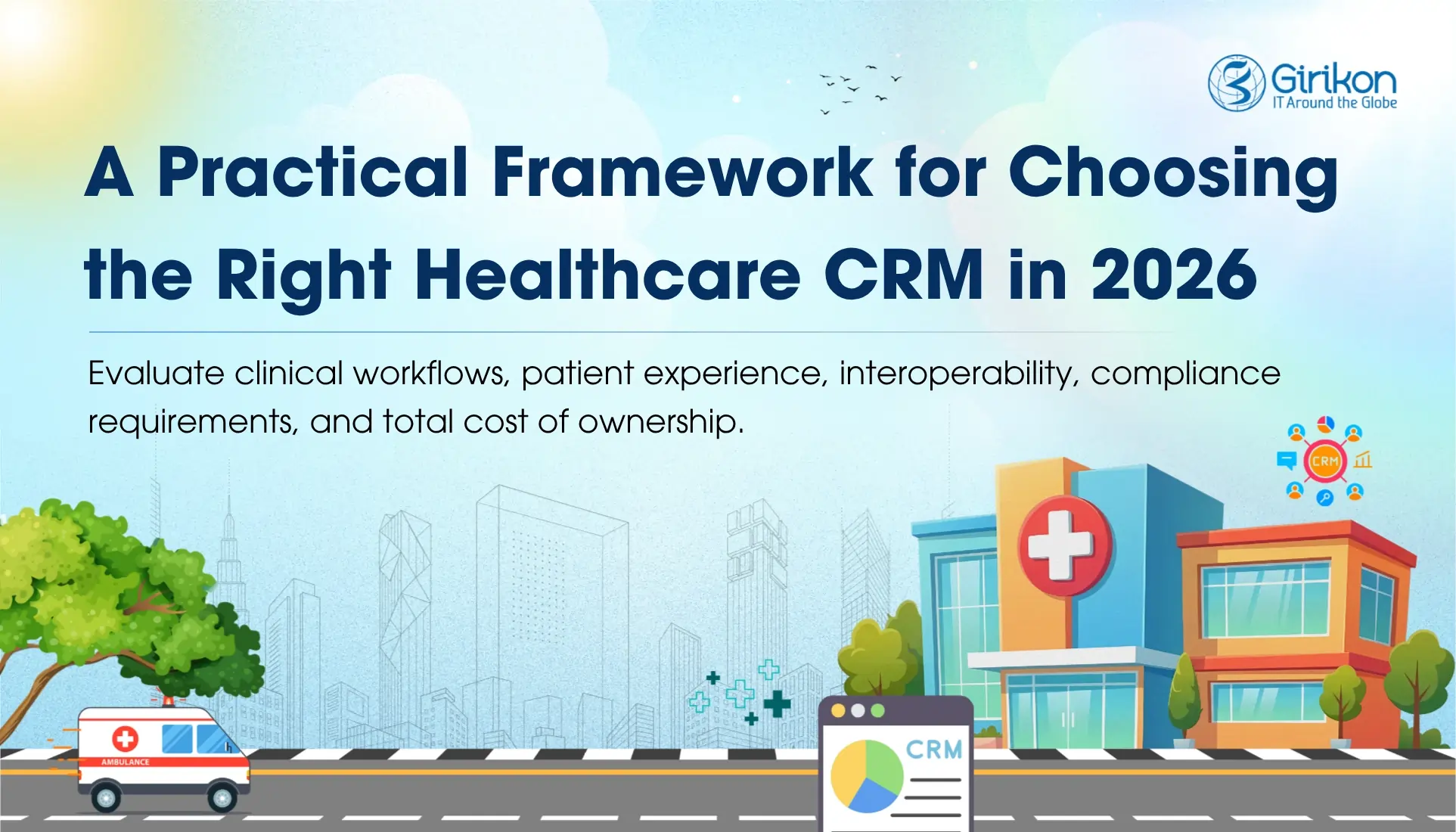
Healthcare has abundant data, and so do the gaps in managing it. Basic details such as patient medical records, health history, diagnoses, and findings can be found in systems that handle these complex details while making them accessible to the appropriate teams simultaneously. However, what happens when medical records are disorganized and inaccessible? As U.S. healthcare organizations continue advancing their methods to deliver better patient care and support medical teams, the debate around Salesforce Health Cloud vs. generic CRM solutions for hospitals remains ongoing. With the growing importance of Salesforce Health Cloud automation, healthcare providers can streamline patient data management, improve care coordination, and reduce administrative burdens. In today’s healthcare landscape, hospital administrators must decide whether investing in a healthcare-specific CRM with advanced automation capabilities is more worthwhile than choosing a generic alternative.
How Has the Role of CRM in Modern Healthcare Evolved
Like any other industry, the health sector is keeping up with changes. Until earlier, hospitals and healthcare organizations purely focused on diagnosis, treatment, and clinical results. While they remain foundational even today, providers are putting immense effort into making healthcare delivery as efficient as possible by coordinating care at various points of contact. Also, a growing patient population keeps pushing for a single, unified system that can kind of stitch together data which is often scattered across departments, different facilities, and multiple applications. Healthcare organizations already churn out huge volumes of data, but the real pain is not the amount—it’s the part where that information actually becomes reachable to the right teams when they need it the most. That’s where digital transformation efforts, like salesforce crm optimization, really matter. They help by smoothing out data handling, strengthening coordination of care, and making it easier for healthcare professionals to get the pertinent patient details more quickly , and with less friction.
When combined with the operational complexities at scale and the evolving expectations of patients, the role of CRMs also expands. A technology that was once limited to managing patients is now required in care of coordination and patient engagement. This switch is a healthcare CRM comparison that emphasizes less on contact management, and more on how effectively a platform can support the realities of healthcare.
Salesforce Health Cloud vs Generic CRM for Hospitals: Use Reality
“Do we adapt a CRM to healthcare, or start with one that was built with healthcare workflows in mind?” The core of the debate is not about features on a page, but about how the system behaves when a hospital is under pressure. That is where Salesforce Health Cloud vs generic CRM hospitals use becomes the real test.
| Evaluation Area | Salesforce Health Cloud | Generic CRM |
|---|---|---|
| Healthcare-specific workflows | Built for referrals, care planning, and follow-up out of the box | Flexible foundation, but workflows must be custom-built |
| Compliance and governance | Operates under healthcare-specific regulatory frameworks | Compliance depends heavily on configuration choices |
| Integration with EHR systems | Designed to coordinate around existing EHR platforms | Integration effort varies by setup and vendor |
| Upfront cost | Higher licensing, less custom build effort | Lower entry cost, more configuration work later |
Healthcare-Specific Functionality
One possible starting point for healthcare CRM comparison could be asking a simple question: What percentage of your health organization’s processes should work within the platform environment at this point? Hospitals have to deal with referrals, care planning, follow-up procedures, and interaction between different groups, which are not so common. They are part of everyday operations. Salesforce Health Cloud serves many healthcare industry purposes, and on-ground scenarios from the CRM itself.
A generic CRM takes a different route. It provides a flexible foundation and leaves more of the workflow design for the organization. That can work well when requirements are relatively straightforward. It becomes more demanding when healthcare-specific processes start piling up, and every new requirement requires another layer of customization. The difference is not necessarily capability. It is often the amount of work required to align the platform with healthcare operations.
Compliance and Data Governance
Healthcare organizations cannot afford to think about their compliance as phase two projects. Patient information is highly confidential, and losing its authenticity is not an option. All appointments, procedures, tests, and changes in patients’ records are surrounded by visibility, consent, and accountability. Therefore, Salesforce Health Cloud is operated under these regulations, which means protection of patients’ confidentiality and compliance with a certain healthcare-specific framework.
While generic CRMs may also cover compliance needs, their approach is heavily dependent on configuration choices and management procedures. For some healthcare organizations, compliance considerations go way beyond mere platform functionality.
Integration with Existing Healthcare Systems
Hospitals already have the technology they need. Challenges arise because each software platform is only limited to storing a particular record or detail irrespective of the whole patient journey. Patient information may be secure inside EHR (Electronic Health Record) platforms, but scheduling data lives somewhere else. Service interactions, patient programs, and engagement activities are often saved in separate applications that need an operational CRM to manage.
That gives rise to another doubt:
Does Health Cloud replace EHR?
The answer is no. EHRs remain the main tool used for capturing patient data, while Health Cloud Salesforce remains the platform that handles other supported functions such as the coordination and management of patient engagement, communication, and collaboration activities.
Cost and Long-Term Considerations
The conversation around Salesforce Health Cloud pricing becomes more interesting when implementation begins. Licensing fees, cost of implementing, configuring, and scalability scope, are few of the factors in determining the final choice. A generic CRM may appear less expensive at the start, while Salesforce Health Cloud may reduce some of the effort associated with building healthcare-specific processes from scratch.
That is why hospitals often find themselves evaluating fit before features. A platform made to align with hospital flows and medical practices doesn’t force tech above best practices.
Final Evaluation
It cannot be said whether a single CRM exists that fits all in the healthcare domain. Every organization has its own challenges and would also prefer a unique approach to tackle them. To find the most suitable CRM solution for healthcare organizations, leaders need to consider their specific pain points against the solutions available for the industry.
What matters is understanding how the platform aligns the realities of the healthcare industry with you and your patients’ expectations.
About Author

Akanksha is a technical content writer with 3+ years of experience creating content for IT services, software development, and Salesforce consulting companies. She specializes in SEO-focused content, technical storytelling, and marketing assets that drive visibility, engagement, and business growth.
Share this post on: