+1-480-241-8198
 +44-7428758945
 +61-1300-332-888
 +91 9811400594
Salesforce AI has changed the way different industries operate and deliver services, and manufacturing is no different. From offering proactive maintenance, automating supply chain management to providing personalized customer service, it does it. Thus, Agentforce in manufacturing is helping manufacturers by working inside the CRM systems teams already use every day to flag what needs attention and why. Whether it’s Sales forecasts that don’t align with production capacity, customer orders that fall through gaps between departments or service calls that get delayed. Salesforce AI in manufacturing addresses this at the process level.
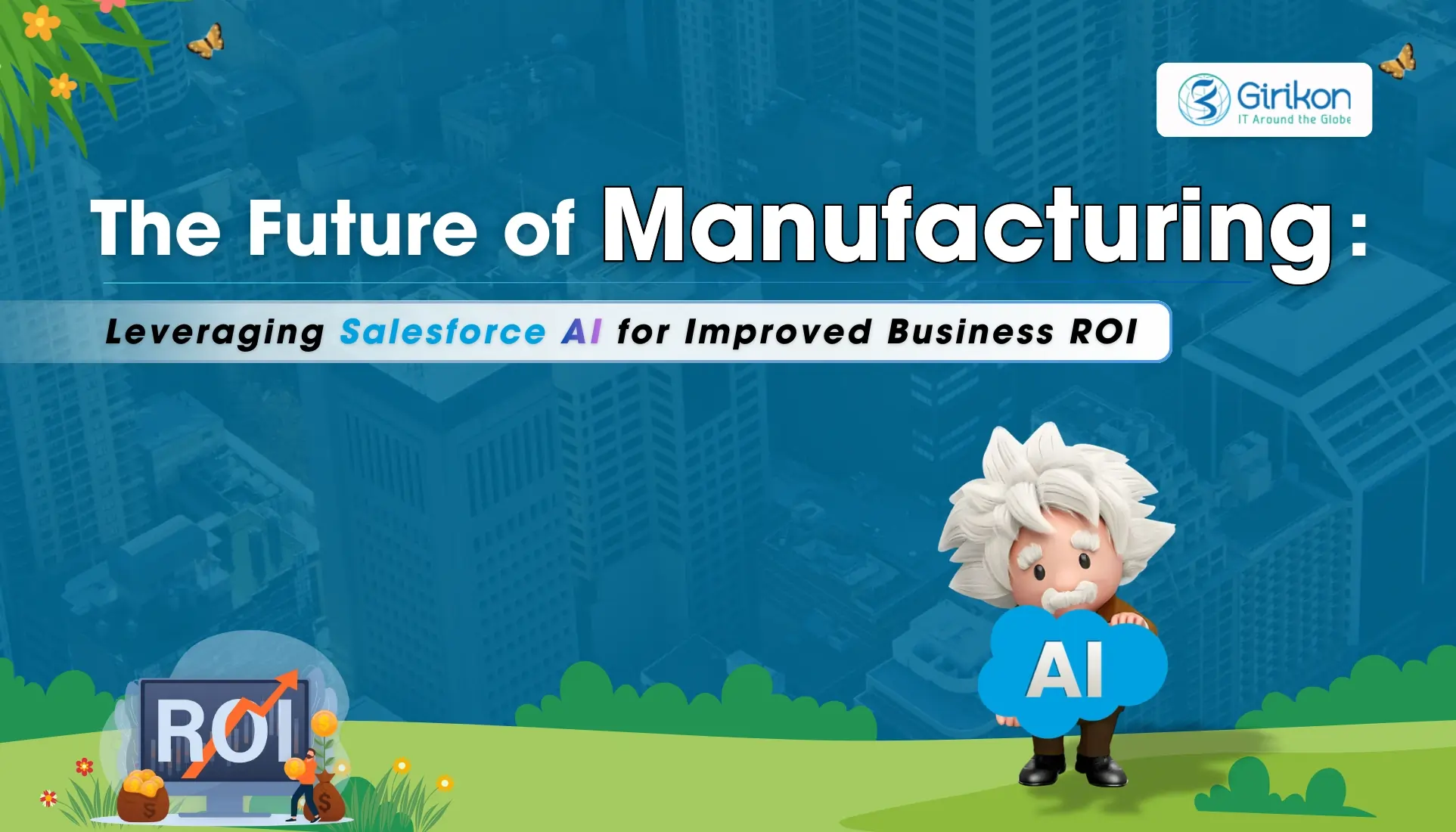
Salesforce manufacturing AI implementation doesn’t live in a separate analytics environment that your team must open and interpret. It operates within the same CRM and operational platform that sales, service, and planning teams are already working in. The intelligence is embedded in the workflow rather than attached to it, and this is how it’s reshaping the industry. There are more manufacturing CRM automation benefits for your business, and this blog will discuss them in detail. In this blog, we’ll explore what Salesforce AI covers in a manufacturing context and 5 areas where it’s having impact. In addition, we’ll also understand the implementation challenges that frequently arise when manufacturers go to deploy it.
What is Salesforce AI?
Salesforce AI refers to the intelligence capabilities embedded across the Salesforce platform through Einstein AI and the Agentforce framework. These are not add-on modules but built into Manufacturing Cloud, Sales Cloud, Service Cloud, and related products that manufacturing organizations use to manage commercial and operational activity.
For a manufacturing business, that means your sales team’s forecasts, your service team’s case history, and your production data can all feed into the same system. With the help of AI-driven manufacturing CRM insights that works off what’s already there: order patterns, customer interactions, equipment records, and reveal issues or insights that would otherwise stay buried in the data.
5 Ways Salesforce AI in Manufacturing is Revolutionizing the Industry
1. Smarter Production Planning
Production schedules built from last month’s actuals will always lag what commercial teams are seeing in real time. Salesforce AI for production planning connects live pipeline data with order history and account-level buying patterns, helping planning teams see demand shifts as they happen.
When a key account’s purchasing behaviour shifts, that change registers in the planning environment before it becomes a capacity problem. Material procurement moves earlier; delivery commitments carry more credibility because they are based on current demand signals rather than assumptions.
2. Lowers Sales Overhead
Manufacturing sales cycles involve multiple contacts, extended timelines, and a volume of administrative activity that consumes a disproportionate share of a sales team’s week. Manufacturing CRM automation benefits include making much of that routine work shifts into the system itself.
Automated follow-up scheduling, opportunity updates, and quote routing take place automatically and scoring is used to find out which deal is moving and which deal is stuck. The sales teams receive AI-driven scoring that identifies live and dormant opportunities. Sales teams find themselves spending more time in conversations that matter, with less of their week lost to maintenance of records.
3. Intelligent Sales Insights
Using the standard sales reports your team can see what has been closed and what didn’t. With manufacturing sales analytics AI can verify where in the cycle deals are being lost, the product lines that are performing poorly in certain territories and customer segments that are demonstrating signs of decreased activities at an early stage.
Leaders can discern the trends previously invisible, and the resourcing or strategy decisions are rooted in detail as opposed to some aggregate revenue numbers. Thus, reviews become less backward in terms of a summary and more forward-thinking regarding what to change, how to adjust to these changes.
4. Condition‑Based Service Management
Scheduled maintenance intervals are a starting point but for manufacturers servicing industrial equipment, actual wear and failure patterns don’t always follow those intervals. When Salesforce connects IoT data, field service history, and equipment records in a single environment, the AI can identify when a specific asset is trending toward a problem. Service visits get scheduled based on what the data indicates and not according to the calendar. This results in fewer breakdowns, a seamless execution of the service, and proactive instead of reactive conversations with the customers.
5. Complete Account Management Visibility
Large manufacturing accounts accumulate years of scattered records across sales, service, and commercial teams. Salesforce AI brings these records together into a single account view, highlighting what is relevant before an upcoming meeting or renewal. This gives account managers a context that is immediate, specific, and relevant, which is also visible to the customer. Over a period, this level of readiness affects the quality of the customer relationship, turning routine interaction into trust and credibility.
Salesforce Manufacturing AI Implementation: Identifying & Addressing Common Challenges
When manufacturers bring Salesforce AI into their operations, the first hurdle is usually the data itself. Years of records live in different systems, and unless those sources are connected and cleaned, the AI can only mirror the gaps it’s fed. Even once the data foundation is in place, success depends on people using the system. Teams that have relied on personal spreadsheets or workarounds for years don’t change habits overnight, and without their input, the AI has little to learn from.
Finally, expectations around ROI often run ahead of reality before businesses defined a Salesforce implementation roadmap. Leaders want quick returns, but migration, training, and adoption take time, and confidence can falter if results don’t show up immediately. However, despite all these challenges, Agentforce in Salesforce still offers a lot of benefits. And the way through these challenges is to start with integrating and auditing data first, proving value with one practical workflow that wins team buy‑in. Additionally, setting milestones that reflect how transformation looks in practice rather than on paper will be the way forward.
Key Takeaways from Salesforce AI in Manufacturing
Salesforce AI in manufacturing delivers value in proportion to how well the organization prepares for it. The technology itself is not the variable that determines outcomes, factors like data quality, team adoption, and clearly defined success criteria are what separate implementations that return results from those that generate activity without impact. Beyond addressing key issues, Salesforce manufacturing AI implementation also offers a structured approach to fix the data and process issues that exist before any AI capability is introduced.
Hopefully, this blog has given you in-depth analysis of how Agentforce in manufacturing can enable manufacturers to seize the value that the CRM platform offers. In addition, if you also want to treat AI deployment as a business improvement exercise rather than a technology project, we recommend you connect with Salesforce AI consulting services partner. Their experts will ensure you avoid complexities, see the returns you were expecting, and in future-proofing your operations.
FAQs
How does Salesforce AI in manufacturing improve production planning?
The Salesforce AI production planning helps manufacturers to make accurate predictions regarding demand, allocation of resources and minimize downtimes. With Agentforce in manufacturing, organizations get real-time visibility of teams, resources, thereby making workflow smoother and increasing Salesforce AI ROI.
What are the benefits of Salesforce manufacturing AI implementation?
Salesforce AI in manufacturing simplifies CRM automation bringing benefits like quicker lead conversion, predictive maintenance, and interpersonal customer engagement. Manufacturing CRM insights generated with AI will enable the responsible decision-makers with actionable insights and enhance efficiency and operational excellence.
What is Salesforce AI consulting services & Why do I need it?
Salesforce AI consulting services assist manufacturers in designing, implementing, and optimizing AI-based solutions that meet their expectations and integrate well within their processes. Since manufacturing is the focus of CRM automation savings and production planning insights, these certified consultants offer manufacturing sales analytics AI, help companies utilize AI-driven manufacturing CRM insights without much hiring overhead costs.
About Author

Anjali is a technical content writer and strategist with 9 years of experience, bringing expertise in creation and strategy for IT services, software development, and Salesforce consulting companies. She excels at developing SEO-driven storytelling and technical narratives, and in crafting marketing assets that boost visibility, accelerate sales, and deliver measurable business growth.
Share this post on: