 +1-480-241-8198
 +44-7428758945
 +61-1300-332-888
 +91 9811400594
Revenue management helps you plan and optimize your products or services pricing and by predicting customer behavior, boosting your revenue margins. Many businesses struggle to understand the difference between gross profit and net profit when analyzing margins, disconnected systems, and constant switching between tools only make this harder. However, with Salesforce Revenue Cloud (Agentforce Revenue Management), businesses can now have their entire revenue lifecycle on one intelligent platform. It also brings the commercial and financial layers of revenue: CPQ, billing, contract management Salesforce, and revenue recognition concept functions on one platform, all drawing from the same customer and transaction data.
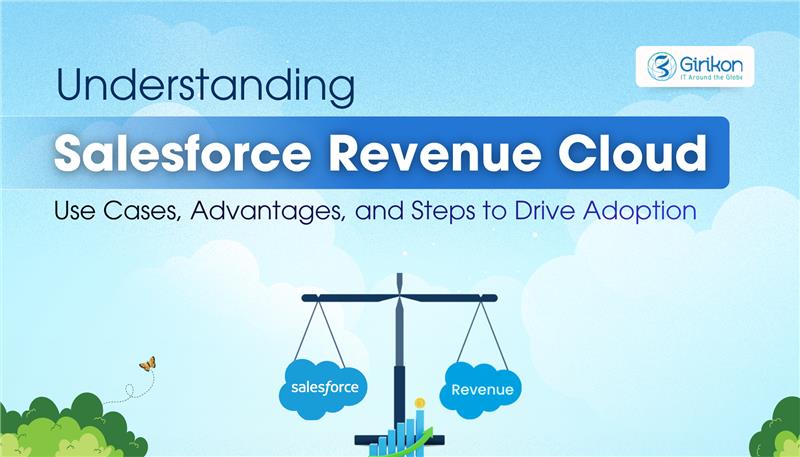
So, quotes reflect what can be billed; billing follows contract terms instead of manually re-entered data. Thus, finance works with structured inputs rather than reconstructing records from disconnected systems. In this blog, we’ll explore the intricacies of Agentforce Revenue Management, its benefits, how it’s implemented, and any future trends to watch out for.
What is Salesforce Revenue Cloud?
Salesforce Revenue Cloud is a software that is Salesforce-native and offers complete revenue lifecycle management to businesses. From product catalog management, Salesforce billing pricing to contracting, order fulfillment, and invoicing, the platform unifies every step of the revenue process.
As Agentforce Revenue Management software, the process has become AI-powered with autonomous agents looking over and automating different tasks such as quote generation, product catalog management or billing.
Key Benefits of Agentforce Revenue Management
1. Shorter Quote-to-Cash Cycles
When CPQ feeds directly into billing, and billing is driven by contract terms, the gap between deal closure and invoicing narrows. Errors that would normally appear during reconciliation are identified earlier.
2. Structured Compliance with Revenue Standards
ASC 606 and IFRS 15 demand consistent recognition policies. Revenue Cloud enforces these across contracts, so journal entries are generated automatically with proper audit trails.
3. Single Source of Truth for Sales & Finance
Differences between pipeline reporting and financial reporting often stem from separate datasets. Revenue Cloud stores the contract, billing and recognition data in the same record eliminating that disconnection. This unified insight also explains the difference between gross profit and net profit, so that finance departments and management can have a similar interpretation of the outcomes.
4. Controlled Scaling of Contract Operations
Amendments, renewals, and terminations are handled through defined workflows. As contract volume increases, operational overhead grows at a manageable pace rather than linearly.
Salesforce Revenue Cloud Explained: Core Features & How the Platform Works
Revenue Recognition Concept Rules Engine
Configurable schedules and allocation of logic apply across contract types, controlling when and how revenue is timed and categorized.
Contract Lifecycle Management
From creation, amendments and renewals to terminations, you follow a structured workflow, making contract management Salesforce and other contract operations consistent and reducing downstream risk.
Billing & Invoicing Automation
It draws invoices directly from contract data; this reduces manual steps, leading to lesser errors and dropping in delayed cash collection.
Asset Lifecycle Management
Tracks assets from acquisition through retirement, keeping depreciation, usage, and revenue impact visible and aligned.
API-First, Composable Architecture
Modular integrations deploy across enterprise systems, accommodating evolving business requirements without broad structural changes.
How to Implement Agentforce Revenue Management: 7 Steps to Know
Step 1: Define Revenue Streams Before Configuration
Configuration built on incomplete business decisions invariably requires structural correction later. Therefore, Salesforce billing pricing structures, billing exceptions, and recognition policies must be fully documented prior to system configuration. These corrections are not minor adjustments; they affect dependent components across the system and consume disproportionate time relative to what proper upfront documentation would have required.
Step 2: Clean Data Before Migration
The quality of your data decides the integrity of Revenue Cloud post-migration. Then when you have duplicated records, half-filled fields or uneven records deposited straight to the new system, it will lead to discrepancies in billing, low chance of reconciliation and false reporting. That is why it’s necessary to follow the Salesforce data migration best practices and establish ownership, document completion requirements, and formal sign-off before the migration window is opened.
Step 3: Configure CPQ Around Actual Deal Behavior
Pricing and product models must reflect how commercial transactions are executed in practice. Processes that frequently differ from operational reality: discounts, bundle adjustments, and approval variations occur routinely. But with a proper CPQ configuration that does not account for these realities, it will be bypassed, producing data inconsistencies that require manual intervention from finance teams to resolve.
Step 4: Align Recognition Policies with Accounting Early
Implementation teams cannot determine compliance requirements independently, and when this alignment is deferred, configuration proceeds on assumptions. Revising recognition logic after go-live affects live transaction data, introduces reporting risk, and requires a level of rework that extends well beyond the original build effort. So, ensure that your revenue recognition concept and logic have accounting review and formal approval before configuration begins.
Step 5: Plan ERP & Tax Integrations Early
Data mapping specifications, posting logic, and tax calculation rules must be defined and agreed upon during the design phase. Integration decisions that remain unresolved at this stage consistently escalate into critical path issues approaching go-live causing unnecessary delays. In addition, these delays require unplanned technical resources and extend implementation timelines in ways that affect broader program delivery and increase budget.
Step 6: Deliver Unified Training Sessions
Sales and finance functions operate interdependent parts of a single revenue process. Training delivered separately produces teams that understand their own scope but not the downstream consequences of their inputs. This gap remains invisible until live operations expose it, so initiate joint training around end-to-end scenarios. It will establish the shared process understanding that separate sessions cannot provide and your team can work together towards boosting Salesforce AI ROI.
Step 7: Validate early billing cycles
Initial billing cycles should be executed in parallel with legacy processes rather than as a direct replacement. Systematic comparison of outputs between both systems identifies configuration gaps and calculation variances that were not surfaced during testing, and issues resolved at this stage remain contained. But the same issues identified post-cutover, particularly after customer statements have been issued, present significantly greater remediation complexity and time.
Revenue Lifecycle Management Trends: What to Look For in 2026 & Beyond
When Salesforce shifted from Salesforce Revenue Cloud to Agentforce Revenue Management, it clearly gave us a sign that it’s targeting a future where most routine revenue tasks will be fully managed by autonomous agents. Moreover, analytics provides the ability to forecast what is going to happen, and teams work on the core activities and not administration. Therefore, in a few years, we can witness the platform being more precise, smart, autonomous, and one of the significant contributors to predictable revenue growth.
Future Trends of Agentforce Revenue Management
AI-Based Contracting
Agents develop sophisticated contracts, discuss, and simplify terms with minimal human intervention even for contract administration Salesforce.
Real-Time Pricing Optimization
Salesforce billing pricing will be done dynamically by intelligent systems to increase margins and competitiveness.
Predictive Customer Insights
Smarter analytics identify the risk of churn earlier and predict the outcome before it impacts performance.
Self-driving Revenue Operations
Full automated operations with accurate and compliant outputs, thus bringing more revenue at a lower operating cost.
Key Takeaways from Agentforce Revenue Management
As we understood so far, Agentforce Revenue Management or formerly Revenue Cloud closes a structural gap. Since commercial systems and financial accounting often operate apart, it leads to separate quoting, billing, and recognition then delays and inconsistencies. Salesforce Revenue Cloud offers you continuity and accuracy from quoting flows through billing into revenue recognition with low manual intervention at each stage. In addition, financial reporting improves because underlying processes align.
With a Salesforce Revenue Optimization solution offering so many benefits, it only makes sense to implement the management platform in your revenue cycle. For optimal results and reduced overhead, hire Agentforce consulting services. They’ll help you realize the platform’s potential to fully and streamline customer service, finance, sales, and marketing at scale without complexity.
FAQs
What is Agentforce Revenue Management and how is it different from Salesforce Revenue Cloud?
Agentforce Revenue Management is the evolved version of Salesforce Revenue Cloud that incorporates AI-driven automation and autonomous agents into revenue lifecycle processes. While Revenue Cloud focuses on unifying CPQ, billing, and revenue recognition, Agentforce enhances this with predictive analytics, intelligent automation, and reduced manual intervention across revenue operations.
How does Salesforce Revenue Cloud ensure compliance with revenue recognition standards?
Salesforce Revenue Cloud supports compliance with standards like ASC 606 and IFRS 15 by applying consistent revenue recognition rules across contracts. It automates journal entries, maintains audit trails, and ensures that revenue is recognized accurately based on predefined schedules and policies.
What are the key prerequisites before implementing Salesforce Revenue Cloud?
Before implementation, businesses must clearly define revenue streams, clean and validate data, align accounting policies, and finalize integration requirements with ERP and tax systems. Proper planning ensures smoother deployment, reduces rework, and improves the accuracy of billing and financial reporting.
About Author

Anjali is a technical content writer and strategist with 9 years of experience, bringing expertise in creation and strategy for IT services, software development, and Salesforce consulting companies. She excels at developing SEO-driven storytelling and technical narratives, and in crafting marketing assets that boost visibility, accelerate sales, and deliver measurable business growth.
Share this post on: